Cooking Up Luxury: Veneta Cucine Premium Kitchen Collections

Indian kitchens are very diverse and one of a kind, different in design and usage. Our liaison with spices and masala, vessels and cutlery and the elaborate foods we prepare makes our kitchens undergo a daily onslaught of work. Therefore, our home’s kitchen organisation is a tough chore with the variety of cuisines we prepare.
Storing utensils, spices, and other food ingredients are one of the greatest peeves for most Indian kitchens. Despite organising and cooking intelligently, one always finds things spilling over to the countertops and sink.
There are so many kitchen designs in the market, and open kitchens are taking the world by storm. The open layout eliminates the barrier between the central living areas and cooking area, but that does not mean an open kitchen is suitable for Desi cooking? Indian cooking is aromatic, flavourful and oily, so spills are bound to happen. So what kind of kitchen features work best for Desi cooking? Let’s find out.
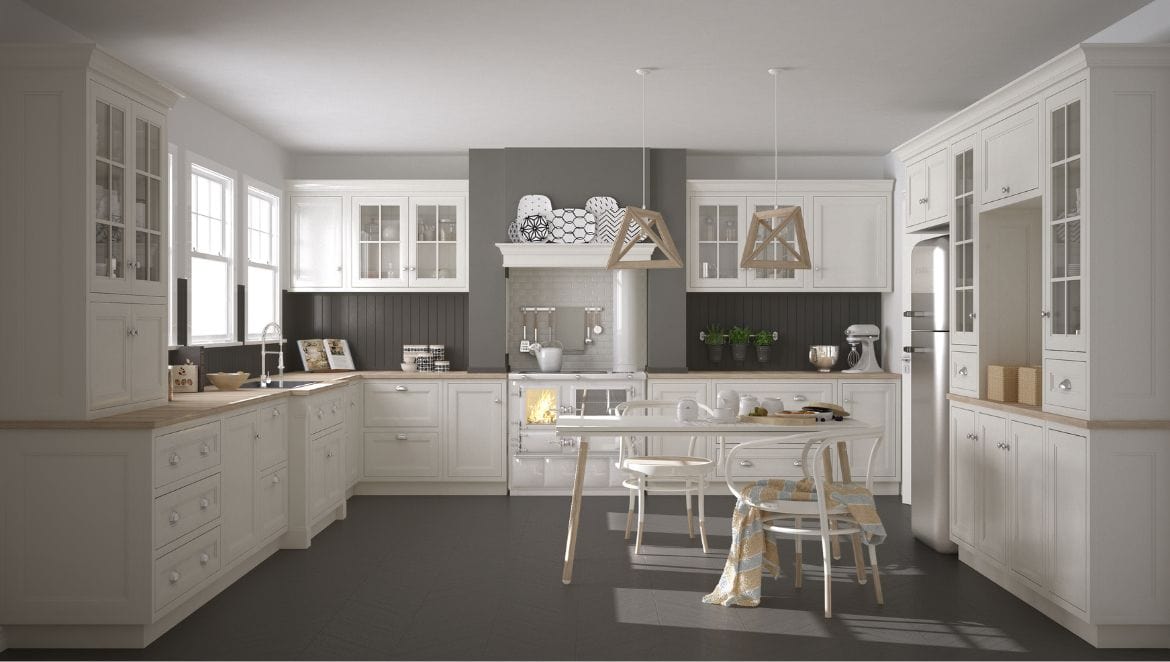
Choosing a style that fits within the structure and dimension of the interior is crucial. The design will also reflect your personality and preferences. A traditional closed kitchen is best suitable for Desi cooking.
A traditional kitchen design will have an array of functionalities and is easier to move around and cook as they are versatile, and you can experiment with various wall patterns and backsplashes. Raised panel doors and kitchen cabinets are the stand-out features of a traditional closed kitchen.
We’d say Indian kitchen and cooking have come a long way. Here are the best features that work for Desi cooking.
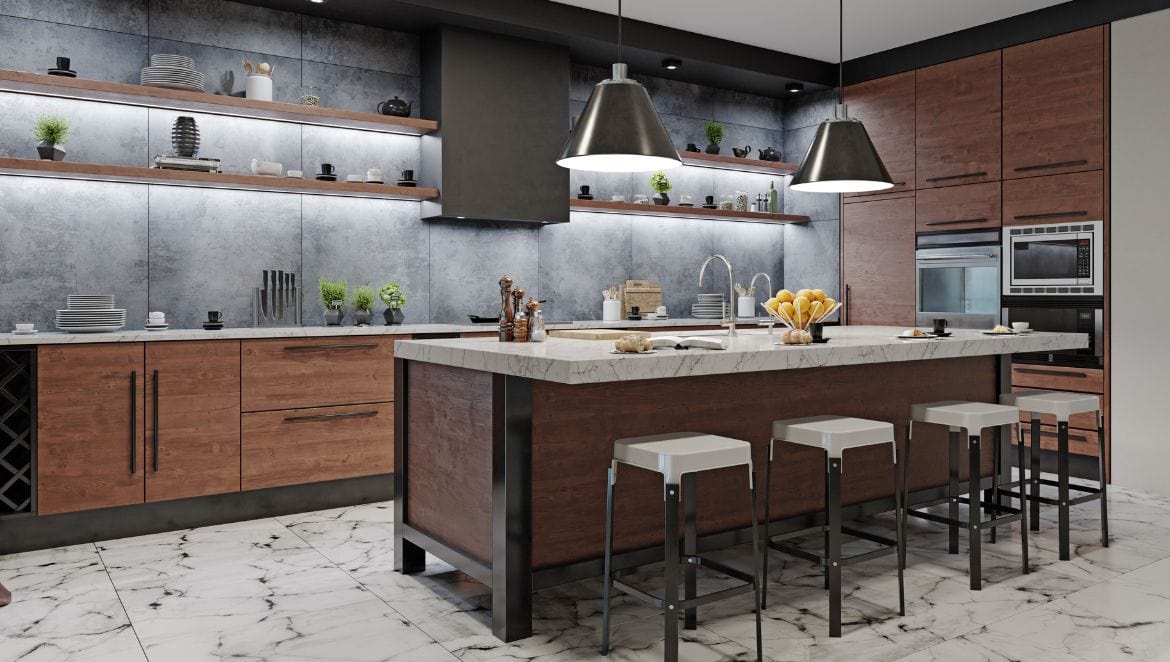
Indian cooking is heavy-duty, frying pans, Kadai, a variety of spices are involved – and it becomes more with a joint family where the kitchen gets busier. A strong countertop is of utmost importance – marble, granite and quartz material are most popular, followed by concrete surfaces like Corian. The countertops from these materials are non-porous, hard, stand up to wear and tear, more comfortable to clean stains and require less maintenance.
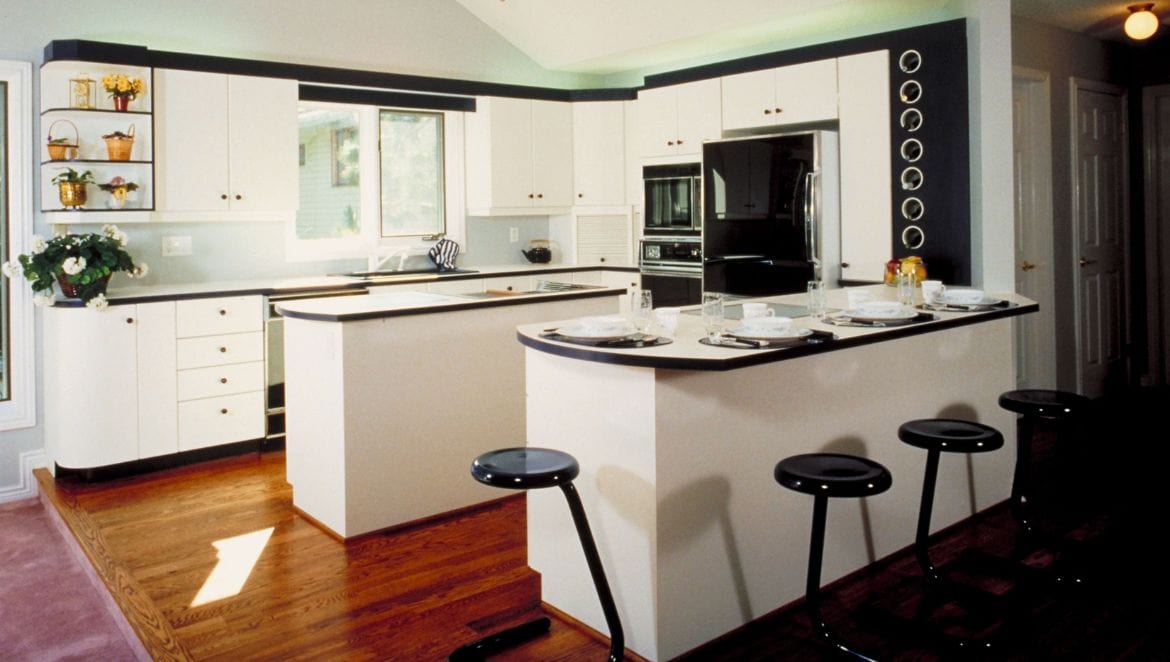
Curry is an integral part of Indian cooking, sticky, oily and finger stains on the cabinets are inevitable. Though an all-white cabinet kitchen looks glamorous, keeping it impeccable will be a problem. Opt for a two-tone cabinet which will satisfy your style and practicality—keeping white for upper cabinets, while the base units can be of a darker shade.
A well-ventilated kitchen is a must for Desi cooking, as it will get rid of strong cooking smells, and helps air pollutants such as smoke, gas and airborne grease to escape. The simplest way to get rid of choking smoke is to invest in a suitable chimney. Alleviating harmful smoke will also result in the improvement of indoor air quality.
Our innumerable spices can do with a cabinet of its own. Small wall shelves or spice racks can give you quick access while cooking can be a bonus. One can use the space between the counter and overhead cabinets for fixing wall accessories to hang spatulas, tongs and other utility items.
There is a lot of prep needed with our kind of cooking and it will be nice to get everything done under proper lighting. Installing task lighting will help illuminate the countertops, so when you’re cooking, a concentrated light focuses on the workspace. Under-cabinet lighting will brighten any kitchen or workspace, illuminating countertops and offering great functionality and style.
Indian cooking is all about the sizzle and simmer than baking and grilling. Use of oil, desi ghee and smoke form a stubborn layer of grime. The smarter approach is to opt for surfaces and finishes that will attract fewer spots and are easy to clean, such as smooth latex paints or laminates.
Having a dedicated sink for cooking and cleaning becomes handy. This segregation helps in decluttering the kitchen. A double bowl sink becomes handy in washing vegetables and meat separately, and the dishes too.
Indian homes are filled with unwanted and oversized utensils, aren’t they? It is a struggle to find space for these items, especially cookers, ubiquitous stainless steel pots, etc. Having a drawer with depth is perfect for storing these pesky items of cookware and when needed, easily accessible. Pull out drawers with dividers in between to separate items can be an ideal solution to de-clutter.
There you have it! These are the features you need that work best for Desi Cooking. We hope you will be inspired to pick up a thing or two. Veneta Cucine India offers an array of tailor-made kitchen designs for your home. A range of exquisite kitchens is available to suit your style and needs. To know more visit https://venetacucineindia.com/kitchen/